 Long Shot
Every enterprise that has piloted a public LLM API for a real business use case has eventually run into the same wall: legal or compliance asks a version of "where exactly does this data go, and who else can see it?" — and the honest answer, for most public API deployments, is uncomfortable enough that the project stalls. For Indian enterprises in banking, insurance, healthcare, and government-adjacent sectors, this isn't a hypothetical concern. It's the difference between an AI initiative that gets board sign-off and one that quietly dies in a security
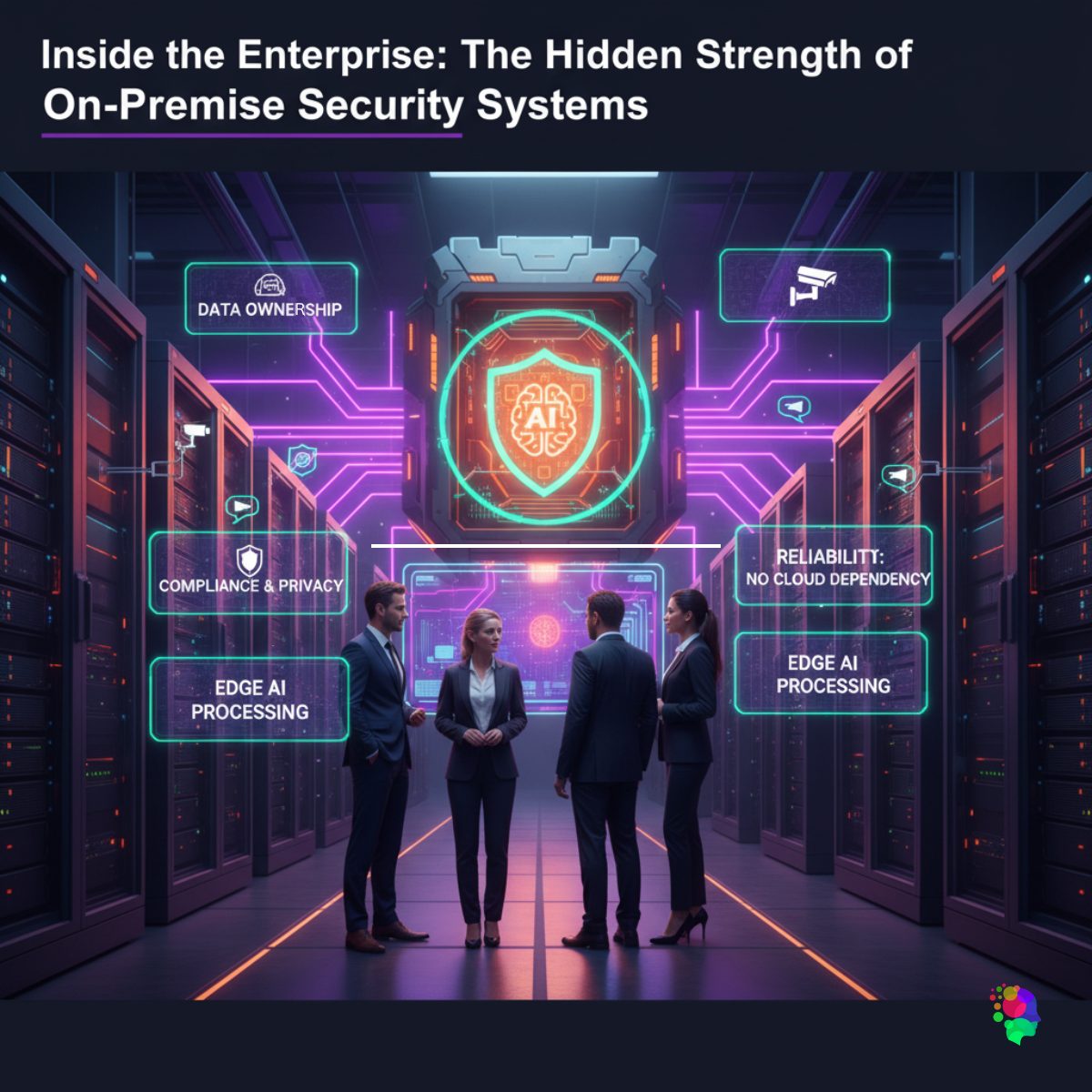
This is why private and on-premise LLM deployment has moved from a niche interest to a genuine enterprise requirement over the last two years — not because public APIs are insecure by design, but because a specific class of Indian enterprise workload simply cannot tolerate customer PII, financial records, or regulated data leaving a controlled environment, regardless of what a vendor's data processing agreement promises.
Why "Just Use the API" Doesn't Work for Regulated Indian Enterprises
Public LLM APIs are genuinely good products, and for a large share of use cases — internal drafting, code assistance, general research — they're entirely appropriate. The friction shows up specifically when the input data includes:
- Customer PII — names, addresses, financial details, KYC documents — that fall under India's Digital Personal Data Protection (DPDP) Act obligations
- Regulated financial data — loan files, transaction records, or credit information that RBI's data localization and outsourcing guidelines treat with specific handling requirements
- Healthcare records — patient data with its own sensitivity classification and consent requirements
- Government or defense-adjacent data — where data sovereignty isn't a preference but a hard mandate
For these categories, sending data to a third-party API — even one with strong contractual security commitments — introduces a dependency that many compliance teams and boards are no longer willing to accept, particularly after several high-profile incidents globally involving AI vendors and data handling missteps.
What "Private Deployment" Actually Means in Practice
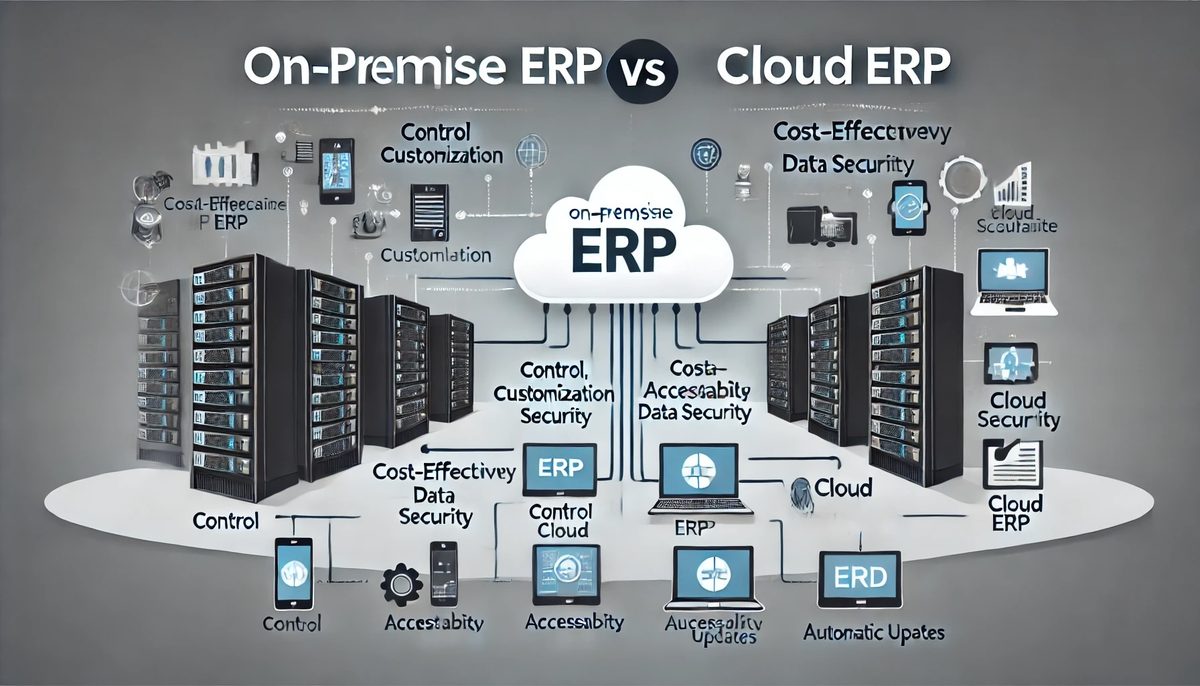
"Private LLM deployment" gets used loosely, so it's worth being precise about the actual options Indian enterprises are choosing between:
1. On-premise deployment. The model runs entirely on the enterprise's own physical infrastructure — in a company-owned or leased data center — with no data or inference requests ever leaving the enterprise's network boundary. This offers the strongest data residency and control guarantees but requires significant upfront infrastructure investment (GPU hardware, in particular) and in-house MLOps capability to operate reliably.
2. Virtual Private Cloud (VPC) deployment. The model runs on cloud infrastructure but within a dedicated, isolated environment — often within an Indian cloud region — where the enterprise controls network access, and the cloud provider contractually and technically prevents data from being used for model training or exposed to other tenants. This is the middle ground most Indian enterprises are actually landing on: enough control to satisfy compliance, without the full capital burden of owning physical infrastructure.
3. Self-hosted open-weight models. Rather than deploying a vendor's proprietary model in a private environment, some enterprises are running open-weight models (Llama, Mistral, and similar) entirely under their own control — trading some capability ceiling for complete transparency over what the model does and where it runs.
Each of these has a genuinely different risk, cost, and capability profile, and the right choice depends heavily on the specific workload and regulatory obligation driving the decision — not on a generic preference for "more private is always better."
Data Residency: The Non-Negotiable for Regulated Sectors
For Indian financial services specifically, RBI's guidelines on outsourcing and data storage have created a strong default expectation that customer data relating to payment systems stays within India, and increasingly, that broader financial and personal data does too under DPDP Act obligations. This has direct implications for LLM deployment:
- Where inference happens matters, not just where the model provider is headquartered. A model hosted on cloud infrastructure physically located outside India, even if operated by a company with an Indian entity, can create data residency exposure the moment customer data is sent as part of a prompt.
- Training data contamination is a distinct risk from inference-time data exposure. Enterprises need explicit contractual and technical assurance that prompts and outputs aren't retained or used to improve the vendor's models — a standard that varies significantly across providers and deployment tiers.
- Sub-processor visibility matters. Many "private deployment" offerings still route through underlying cloud infrastructure providers, storage layers, or logging systems that constitute additional sub-processors. A genuinely private deployment requires mapping this full chain, not just the primary vendor relationship.
Security Considerations Beyond Data Residency
Data residency gets the most attention, but a private LLM deployment introduces security considerations that extend well beyond "where is the data physically stored":
Access control and audit logging. Who within the enterprise can query the model with sensitive data, and is every query logged in a way that supports later audit or incident investigation? This is a governance question as much as a technical one — and one that regulated enterprises need answered before deployment, not after an incident.
Prompt injection and output validation. A privately deployed model is still vulnerable to prompt injection attacks if it's processing untrusted input (customer messages, uploaded documents) — data residency doesn't solve for model-level security vulnerabilities, and enterprises need a separate layer of input sanitization and output validation regardless of deployment model.
Model update and patching cadence. Self-hosted and on-premise deployments put the burden of keeping models updated — for both capability and security patches — entirely on the enterprise's internal team, which is a meaningfully different operational commitment than relying on a vendor's managed update cycle.
Infrastructure security fundamentals still apply. A privately deployed LLM running on poorly secured infrastructure is not meaningfully safer than a well-secured public API — network segmentation, encryption at rest and in transit, and standard infrastructure hardening remain foundational regardless of deployment model.

Making the Build vs. Buy Decision
For most Indian enterprises, the realistic decision isn't "build everything in-house" versus "use a public API as-is" — it's identifying which specific workloads genuinely require private deployment and routing only those through the higher-cost, higher-control infrastructure, while lower-sensitivity workloads continue using more standard API access. A practical framework:
- Map data sensitivity first. Classify use cases by whether they touch regulated PII, financial data, or health records — this determines the deployment tier needed, not organizational preference.
- Start with VPC deployment for regulated workloads rather than jumping straight to full on-premise infrastructure, unless data sovereignty requirements are absolute (defense, certain government contracts).
- Build internal capability incrementally. Enterprise AI deployment at this level requires MLOps, security, and compliance expertise working together — a capability gap that's often underestimated when enterprises budget for infrastructure but not for the operational team needed to run it reliably.
- Treat vendor due diligence as an ongoing process, not a one-time procurement check — sub-processor changes, infrastructure migrations, and policy updates on the vendor side can all shift the residency and security posture of a deployment that was compliant at signing.
The Bottom Line
Private and on-premise LLM deployment isn't primarily a technology decision for Indian enterprises — it's a compliance and risk decision that happens to require significant technology investment to execute well. The enterprises getting this right aren't necessarily the ones with the most sophisticated infrastructure; they're the ones that have done the unglamorous work of mapping exactly which data flows require this level of control, and building deployment architecture proportional to that actual regulatory exposure — rather than either over-investing in infrastructure for low-sensitivity use cases or under-investing in control for the handful of workloads where a data residency failure would be genuinely serious.